
Valve Seat Materials: EPDM vs Rubber vs PTFE vs PEEK, and Where Each Belongs

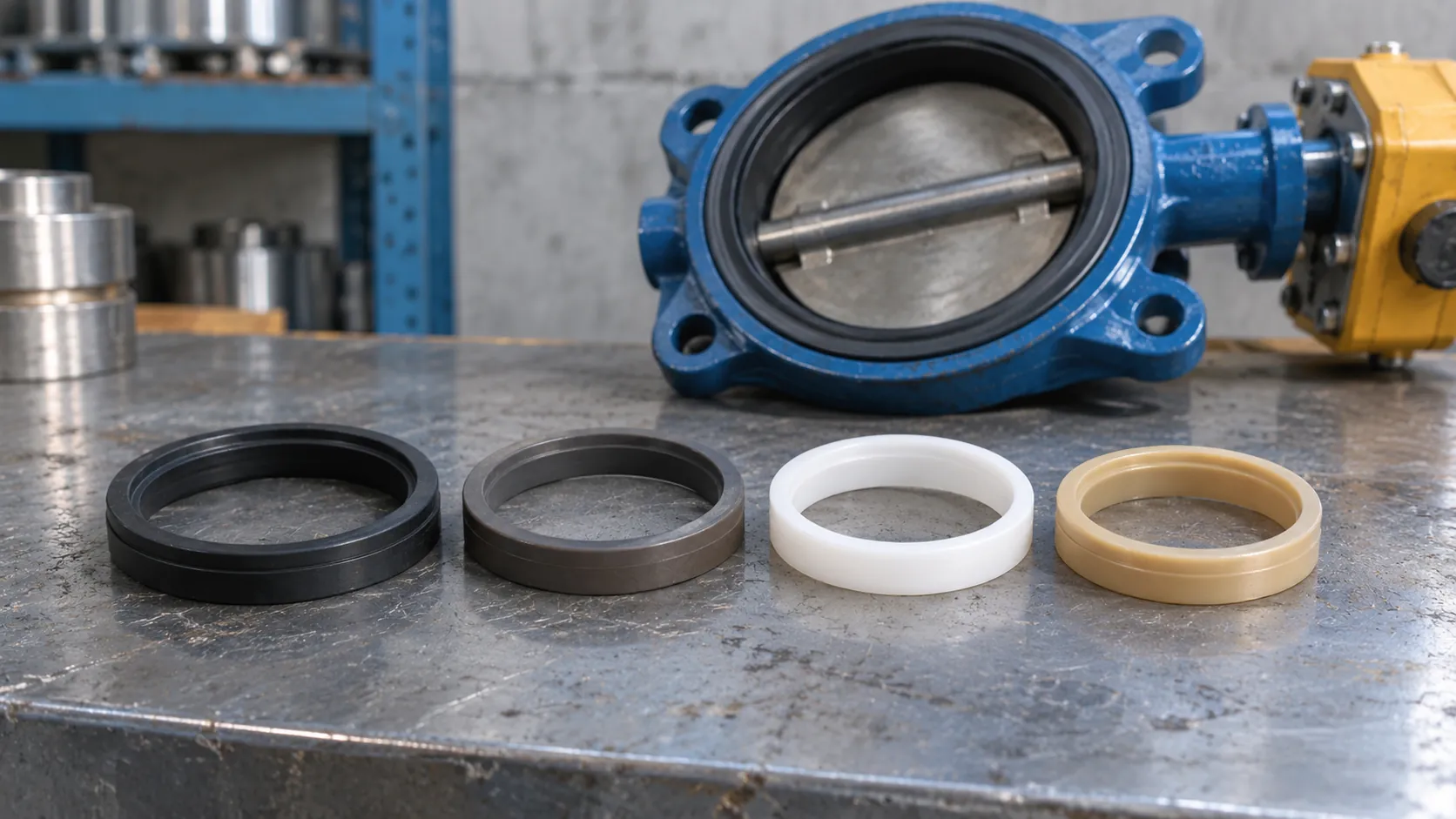
Quick Answer
The right valve seat material depends on temperature, chemistry and cycle life, not on price. This guide compares EPDM, rubber, PTFE and PEEK and shows where each belongs, from potable water to hot acid and abrasive slurry.
The valve body usually outlives three or four seats. Cast steel or stainless does not care about a leaking gland or a hardened gasket, but the seat is a few grams of polymer that carries the whole sealing job, and when it fails the valve passes fluid it was bought to stop. Maintenance teams then blame the manufacturer, when the cause is often a valve seat material that was never matched to the fluid: an elastomer that swelled in a fuel line, a PTFE ring that crept under pressure, or a rubber lining worn through by sand.
The valve seat material is chosen from five facts: what the fluid is chemically, how hot it gets, how much pressure the seat sees, whether the fluid carries abrasive solids, and how tight the shutoff has to be. EPDM and other rubbers suit water, PTFE suits aggressive chemicals, and PEEK suits hot, high-pressure or abrasive service. Metal takes over where plastics run out of temperature. This guide compares each option, explains where a resilient seated butterfly valve or a ball valve seat fits, and ends with the questions to answer before ordering.
What the Seat Actually Does
A valve seat is the surface the closing element presses against to stop flow. In a butterfly valve, the disc rotates into a seat ring set in the body. In a ball valve, the ball rests against two seat rings, one upstream and one downstream. In an angle seat valve, a piston-driven plug presses onto a seat inside the body. The geometry changes, but the job is the same: deform slightly, fill the microscopic gaps between two surfaces, and hold the pressure difference.
Soft seats do that by yielding. An elastomer or polymer conforms to the metal, which is why a soft-seated valve can reach bubble-tight shutoff. ISO 5208 grades leakage through closed valves in rates from A, which allows no visible leakage, to coarser rates for metal-seated designs, and the FCI 70-2 standard rates control valve leakage in classes, with Class VI the tightest for soft seats. Metal seats trade tight shutoff for survival: they take temperature, erosion and fire without damage, but they leak a measurable amount even when new. Choosing between soft and metal is the first decision, and the valve seat material within the soft family is the second.
Two seat properties explain most failures. The first is chemical compatibility. A polymer either resists the fluid or swells, hardens, cracks or dissolves in it. The second is mechanical behavior under load and heat. Some materials flow slowly under constant pressure, which is called creep or cold flow, and others stay stiff but wear faster against abrasive solids. A good selection checks both.
Rubber and Elastomer Seats: Where the Resilient Seated Butterfly Valve Wins
Most plants meet the topic first through the resilient seated butterfly valve, the commonest large-bore isolation valve in water, cooling and general utility work. Its seat is a molded elastomer ring or liner, and the disc compresses it on closing. The design is light, low in torque and cheap per millimeter of diameter, which is why it dominates pipe sizes above 100 mm in water service. A rubber seat butterfly valve that is correctly specified delivers bubble-tight shutoff for years.
The design comes in three common forms. A concentric, or zero-offset, valve has the disc pivot on the pipe centerline and relies entirely on the rubber being squeezed all the way round, so seat wear and torque are highest at the start and end of the stroke. A double-offset valve moves the shaft off the seat plane and off the pipe centerline so the disc lifts away from the seat after the first few degrees, which reduces wear and allows a harder seat. A triple-offset valve adds a conical sealing geometry and normally carries a metal seat. For water, cooling and general utility lines, the concentric rubber-lined valve is still the economical choice, as long as the elastomer suits the fluid.
"Rubber" covers several different compounds, and the differences decide the application. Natural rubber and SBR resist abrasion well and handle slurry, sand and mining service at moderate temperatures, but they dislike oils and ozone. Nitrile (NBR, often called Buna-N) resists petroleum oils and fuels and typically works from about −30 °C to 100 °C. EPDM handles water, steam and many chemicals but fails in oil. Fluoroelastomer (FKM) resists fuels, oils and many chemicals and runs to about 200 °C, but it suffers in hot water, steam and amines. Each figure is a typical range, and the manufacturer's temperature and chemical charts govern a real purchase.
The right seat shows up on the nameplate and in the bill of materials as a code, and the codes are not obvious: EPDM, NBR, FKM, NR. A purchase order that says only "rubber seat butterfly valve" invites the cheapest compound, and the cheapest compound is not the one a diesel line needs. State the elastomer by name and ask for the compound's datasheet.
EPDM: The Water Seat and Its Hydrocarbon Blind Spot
Ethylene propylene diene monomer rubber is the default seat for water. It resists ozone, weather and ageing, tolerates hot water and low-pressure steam, and handles glycols, dilute acids and dilute alkalis. General grades run from about −40 °C to 120 °C, and peroxide-cured grades extend toward 150 °C for hot water and steam duty. Potable water adds a regulatory layer: in the UK the material needs WRAS approval, and in the United States NSF/ANSI 61 certification, so a seat that is chemically fine can still be unacceptable on a drinking water line if the compound is not listed.
EPDM has one blind spot, and it is a large one. Petroleum oils, fuels, greases and many solvents make it swell. A swollen seat grips the disc harder, torque climbs, actuators trip on over-torque or fail to stroke, and eventually the seat softens and tears. The same fault appears, with less warning, in compressed air systems, where oil carried over from a lubricated compressor swells EPDM seats downstream, and in lines where a lubricant is added deliberately. When a site uses one valve specification across cooling water, compressed air and a diesel transfer line, EPDM is the seat that fails first on the last two.
Fire safety is another limit. EPDM burns, so a valve in a flammable service that must stay tight in a fire needs a design tested to API 607 or ISO 10497, which normally means a metal secondary seat behind the soft one. A plain rubber seat does not qualify.
PTFE Valve Seat: Chemical Resistance with a Creep Problem
Polytetrafluoroethylene resists nearly every industrial chemical. Strong acids, strong alkalis, solvents and oxidizers that destroy elastomers leave PTFE untouched, and its low friction keeps torque low. That makes the PTFE valve seat the standard answer for chemical dosing, acid lines, solvent handling and pharmaceutical or food service in FDA-grade form. A PTFE ball valve seat sits in most floating-ball designs in the process industries, and a PTFE seal fits angle seat valves in steam and aggressive-media service.
The weakness is mechanical. Virgin PTFE is soft and creeps under sustained load, so a seat squeezed between a ball and a body slowly flows away from the contact zone, and the valve starts to weep after a few hundred cycles at high temperature or pressure. Valve makers manage this with fillers and design: glass-filled or carbon-filled PTFE (often written RPTFE) resists creep better, modified grades such as TFM improve it further, and seat shape and backup rings limit the flow. The material itself survives well above 200 °C, but a seat's usable limit is lower and falls as pressure rises, which is why every PTFE seat comes with a pressure and temperature chart and why the chart must be read.
PTFE also permeates. Small molecules, including some gases, migrate slowly through it, so a PTFE seat in a high-pressure gas valve may need a design that prevents blistering on rapid depressurization. And a PTFE seat tolerates abrasive slurry poorly, since solids embed in the soft surface and score the ball.
Real products show the range. The Bürkert Type 2000 pneumatic angle seat valve in the TCC catalog uses a PTFE seal for media from −10 °C to 180 °C, with a gunmetal or 316L stainless body. The SMS-TORK EAV-907F is an electric actuated flanged ball valve with PTFE seats in a carbon steel body, sized from DN 15 to DN 200, and the Bürkert Type 2000 angle seat valve and the SMS-TORK EAV-907F ball valve show how seat material and body material are chosen together.
PEEK Valve Seat: High Pressure, High Temperature and Abrasion
Polyetheretherketone is a semi-crystalline engineering thermoplastic that does what PTFE cannot. It is several times stiffer, so a PEEK valve seat does not creep under pressure, and it carries pressure ratings that soft PTFE would not hold. It works continuously to roughly 250 °C, and it resists steam, hot water, hydrocarbons, amines and most solvents. Wear resistance is excellent, so it survives particles and repeated cycling that would shred PTFE. Gas processing, boiler and steam systems, abrasive process liquids, and high-pressure instrumentation all use it.
The cost of that strength shows up in three places. PEEK is harder, so it needs a smoother ball and tighter machining to reach bubble-tight shutoff, and it forgives scratches less than PTFE does. It costs more. And concentrated sulfuric and nitric acids attack it, so it is the wrong choice for strong oxidizing acid service where PTFE is correct. Many manufacturers pair the two: a PEEK seat for the pressure-bearing face and a PTFE or elastomer insert for the sealing lip.
Where temperatures exceed what any polymer holds, the answer is a metal seat. A triple offset butterfly valve, with its conical seat geometry and laminated or solid metal seat ring, closes without rubbing and survives high-temperature steam, hot oil and fire. It is the usual replacement for a rubber-lined valve when temperatures climb past 200 °C or when fire-safe certification is mandatory, though it costs more than a soft-seated valve and its shutoff, though very good, is not quite bubble-tight in every case.
PEEK vs PTFE and the Other Seats Side by Side
The question of PEEK vs PTFE comes up on any project that has hot, pressurized or mixed chemical service, and the answer depends on which limit is closer. If the chemistry is the constraint, PTFE wins. If pressure, temperature or abrasion is the constraint, PEEK wins. The table compares the four materials in this article on the measures that drive selection. All figures are typical ranges and should be checked against the manufacturer's data.
| Property | EPDM | NBR and natural rubber | PTFE | PEEK |
|---|---|---|---|---|
| Typical temperature range | −40 to 120 °C (to 150 °C peroxide-cured) | −30 to 100 °C (natural rubber lower) | −50 to about 200 °C in a seat | −50 to about 250 °C |
| Water and steam | Excellent, steam in cured grades | Fair for water, poor for hot water | Excellent, filled grades for steam | Excellent, resists hydrolysis |
| Oils and fuels | Poor, swells | Excellent (NBR) | Excellent | Excellent |
| Strong acids and solvents | Poor to fair | Poor | Excellent | Good, but not concentrated sulfuric or nitric |
| Abrasive solids | Fair | Excellent (natural rubber) | Poor | Excellent |
| Creep under load | Low | Low | High unless filled | Very low |
| Shutoff when new | Bubble-tight | Bubble-tight | Bubble-tight | Tight, needs good surface finish |
| Relative cost | Low | Low | Medium | High |
A seat that fits the fluid but not the pressure fails slowly. A seat that fits the pressure but not the fluid fails in a week. Check both before the order goes out.
The Seat Is One Part of a Sealing System
A valve seat material has to work with the parts around it. The stem seal, whether an O-ring, V-ring or packing, sees the same fluid and the same temperature, and a stem seal that swells or hardens leaks to atmosphere long before the seat leaks internally. The body lining or coating, the shaft material and the disc finish all affect how long the seat lasts, because a rough or corroded disc edge cuts a soft seat much faster than a polished one.
The actuator belongs on the same list. A resilient seat takes more torque when it is cold, when it has swelled, or when the valve has sat closed for months, and the actuator and gearbox need margin for all three. Torque figures in catalogues are usually given for clean water at ambient temperature. A site that closes a valve once a year against a dry, swollen seat can need two or three times the catalog torque, and a marginal actuator fails to close on the day it is needed.
Cycling frequency changes the answer too. A valve that opens and closes hundreds of times a day wears a soft seat in a way a valve that stays open for months does not, and rapid cycling on a hot line can overheat an elastomer by friction. For high-cycle duty, PEEK or a reinforced PTFE seat usually outlasts rubber, and a reinforced seat design is worth a higher purchase price. For isolation valves that move twice a year, the opposite holds: a simple elastomer is cheaper and perfectly adequate, provided the fluid compatibility has been checked. Put the cycle count into the specification, because it is one of the few inputs that can be estimated before the plant runs.
Real-World Scenario: One Valve Specification, Three Different Failures
A food and beverage site standardized on one DN 150 butterfly valve with EPDM seats for all utility lines, and over eighteen months it suffered three seat failures that looked unrelated. The illustration below is typical of what a maintenance review finds, and the details are illustrative.
On the chilled water loop, the EPDM seats were fine, and nothing was wrong. On the diesel transfer line to the standby generator, the valve began to need more torque to close, then stuck partly open. Dismantling it showed a swollen, tacky seat that had grown past its groove. On the compressed air header downstream of an oil-flooded compressor, the valves leaked at the seat after a year, and the seats were again swollen, this time from oil mist carried over in the air.
The fix was to stop treating the valve as one item. The diesel line went to NBR seats, with a note that FKM is the upgrade if the fuel is warmed. The compressed air valves moved to NBR as well, since oil carry-over was a fact of the system. The caustic wash line for the clean-in-place loop, which had not yet failed, was audited and found to have EPDM seats in a hot caustic service where that is acceptable, so it stayed. The cost was a revised valve specification table that lists seat material by service and a spares list that matches it, and the failures stopped.
Specifying a Seat: Questions to Answer Before Ordering
A complete valve seat material specification takes ten minutes and prevents the failures above. Start with the fluid: its name, concentration, and any additives or contaminants, including oil carry-over in air and traces of solvent in water. Add the temperature range, including upsets, steam-out and cleaning cycles, and the normal operating point alone is not enough. Add the pressure, and the pressure difference across the closed valve.
Then describe the duty. Note whether the fluid carries solids and how abrasive they are, how often the valve cycles, and what leakage class the process needs. State whether the valve has to survive a fire, which brings API 607 or ISO 10497 into play, and whether the line is potable or food-contact, which brings WRAS, NSF or FDA listings. Name the actuator, because a seat that swells or stiffens raises torque and a marginal actuator then fails first.
Finally, read the manufacturer's pressure and temperature chart and chemical resistance table for the exact seat compound, not a generic table for the polymer family. Request a sample of the compound where the fluid is unusual, and keep a spare seat kit on site for any valve that isolates a critical line. The pressure switch selection guide for skid systems uses the same fluid-first logic for instruments, and the Potter VSR valve explainer is a good example of how valve internals decide behavior.
A seat selected from fluid data stays quiet for years, and one selected from a price list generates work orders. TCC supplies automated and manual valves with the seat materials described here, and its instrumentation and control team checks compatibility against the fluid before a quotation goes out. For motorized and pneumatic valves, the valve positioner guide covers the control side, and our industrial automation service brings valve status and torque data into the plant control system, so a drifting seat shows up in trends before it leaks.
Frequently Asked Questions
What is the best valve seat material?
No single material is best. EPDM suits water and steam, NBR suits oils and fuels, PTFE suits aggressive chemicals, PEEK suits hot, high-pressure or abrasive service, and metal suits temperatures beyond what polymers hold. The right choice comes from the fluid, temperature, pressure, solids content and required shutoff tightness. Always check the manufacturer's pressure and temperature chart and chemical resistance table for the exact compound.
What is the difference between PEEK and PTFE valve seats?
PTFE resists nearly all chemicals and has low friction, but it is soft and creeps under pressure and heat. PEEK is much stiffer, resists creep and abrasion, and handles higher pressure and temperature, but it costs more, needs a smoother mating surface, and is attacked by concentrated sulfuric and nitric acid. Pick PTFE where chemistry limits the seat and PEEK where pressure, heat or wear does.
Why do EPDM seats fail in fuel and compressed air lines?
EPDM swells in petroleum oils, fuels, greases and many solvents. A swollen seat grips the disc, raises torque and eventually softens and tears. Compressed air carries oil mist from lubricated compressors, which has the same effect over a year or two. Use NBR for oils and fuels, or FKM where temperature or chemistry requires it, and confirm with the manufacturer's compatibility chart.
What is a resilient seated butterfly valve?
A resilient seated butterfly valve has an elastomer seat ring or liner in the body that the disc compresses when it closes. The soft seat gives bubble-tight shutoff at low torque and low cost, especially in large diameters. The elastomer, such as EPDM, NBR or FKM, must match the fluid, and the valve is limited by the temperature and pressure the elastomer can withstand.
Related products
Components from our catalogue relevant to this article — request a quote for availability, lead time and pricing.
/009G7056 Danfoss.webp "Danfoss Danfoss GBC 28s Shut-Off Ball Valve, 1 1/8 in, with Access Port | Refrigeration ball valve, 1 1/8 in ODF/ODF, access port, Kv 62.25, 45 bar")
Danfoss GBC 28s Shut-Off Ball Valve, 1 1/8 in, with Access Port
Refrigeration ball valve, 1 1/8 in ODF/ODF, access port, Kv 62.25, 45 bar
/009L7025 Danfoss.webp "Danfoss Danfoss GBC 22s Shut-Off Ball Valve, 7/8 in (22 mm) | Refrigeration ball valve, 7/8 in / 22 mm ODF, Kv 33.34, 45 bar")
Danfoss GBC 22s Shut-Off Ball Valve, 7/8 in (22 mm)
Refrigeration ball valve, 7/8 in / 22 mm ODF, Kv 33.34, 45 bar
/TORK-EAV 901 Electric Actuated Brass Ball Valve.webp "SMS-TORK SMS-TORK EAV-901 Electric Actuated Brass Ball Valve | Electric actuated full-bore brass ball valve, 1/4\" to 3\", PN 40 to PN 25, -20 to +130 C, IP67")
SMS-TORK EAV-901 Electric Actuated Brass Ball Valve
Electric actuated full-bore brass ball valve, 1/4" to 3", PN 40 to PN 25, -20 to +130 C, IP67
/TORK-EAV 907 Electric Actuated Carbon Steel Flanged Connection Ball Valve.webp "SMS-TORK SMS-TORK EAV-907F Electric Actuated Carbon Steel Flanged Ball Valve | Electric actuated 3-piece flanged carbon steel ball valve, DN 15-200, EN 1092-1, PTFE, EN 10204 3.1")
SMS-TORK EAV-907F Electric Actuated Carbon Steel Flanged Ball Valve
Electric actuated 3-piece flanged carbon steel ball valve, DN 15-200, EN 1092-1, PTFE, EN 10204 3.1