
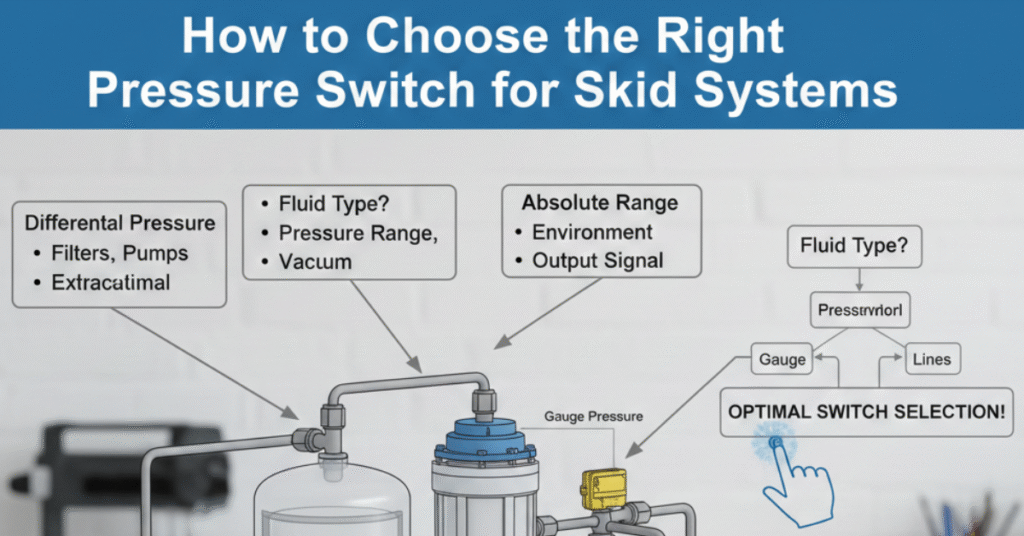
How to Choose the Right Pressure Switch for Skid Systems
Selecting the right pressure switch for skid systems is a critical decision that directly affects performance, safety, and long-term reliability. Skid-mounted systems are widely used across industries such as oil and gas, water treatment, power generation, and chemical processing. These systems operate under specific pressure conditions, making pressure switches an essential component for monitoring, control, and protection.
In this guide, we will explain how these devices work and the key factors you must consider to choose the right pressure switch for skid systems. Whether you are designing a new system or upgrading an existing one, this article will help you make an informed choice.
Understanding the Role of a Pressure Switch for Skid Systems
A pressure switch is an electromechanical device that opens or closes an electrical circuit when a predetermined pressure level is reached. In skid systems, these switches play a vital role in:
-
Maintaining safe operating pressure
-
Protecting pumps, compressors, and pipelines
-
Triggering alarms or system shutdowns
-
Ensuring compliance with safety standards
Because skid systems are often pre-engineered and operate in demanding environments, selecting the wrong component can lead to frequent failures, downtime, or safety hazards.
Key Factors in Selecting a Pressure Switch for Skid Systems
1. Pressure Range Requirements
The most important factor is the operating pressure range. Pressure switches are designed to work within specific minimum and maximum limits.
-
Choose a range that covers your normal operating pressure.
-
Avoid selecting a switch that operates too close to its maximum limit.
-
Consider both set pressure and reset pressure (differential).
- How to Choose the Right Pressure Switch for Skid Systems
2. Type of Pressure Switch for Skid Systems
There are different technologies available depending on your precision needs:
-
Mechanical pressure switches: Simple, durable, and widely used.
-
Electronic pressure switches: Offer higher accuracy and digital outputs.
-
Differential pressure switches: Used to monitor pressure differences across filters or pumps.
- How to Choose the Right Pressure Switch for Skid Systems
3. Accuracy and Repeatability
Accuracy is critical where precise control is required. Repeatability ensures the switch activates consistently at the same point over multiple cycles. High repeatability reduces false alarms and system interruptions.
4. Environmental Conditions and Enclosures
Skid systems are often installed in challenging environments. When you choose a pressure switch for skid systems, consider:
-
Temperature extremes and humidity.
-
Dust, dirt, or corrosive substances.
-
Mechanical vibration and hazardous area approvals (explosion-proof designs).
5. Media Compatibility
The switch must be compatible with the fluid or gas used. Incompatible materials can lead to corrosion or leakage. Always check the diaphragm and wetted material specifications, especially in chemical processing or oil and gas applications.
6. Electrical Ratings and Output Type
The switch must interface correctly with your control panels or PLCs.
-
Verify voltage and current ratings.
-
Select the correct contact type (Normally Open or Normally Closed).How to Choose the Right Pressure Switch for Skid Systems
Common Applications: Where to Use a Pressure Switch for Skid Systems
These components are widely used across various skid-mounted applications, including:
How to Choose the Right Pressure Switch for Skid Systems
-
Pump protection systems
-
Compressor control skids
-
Filtration and separation skids
-
Hydraulic power units
-
Water and wastewater treatment skids
Mistakes to Avoid When You Choose a Pressure Switch for Skid Systems
To ensure long-term reliability, avoid these common pitfalls:
-
Selecting based solely on price: Low-quality components often lead to higher long-term costs due to failure.
-
Ignoring media compatibility: Using the wrong wetted materials can cause immediate hardware degradation.
-
Incorrect Pressure Range: Using a switch at the very edge of its limit reduces its lifespan.
-
Overlooking Safety Certifications: Always ensure the part meets local and international regulationsHow to Choose the Right Pressure Switch for Skid Systems How to Choose the Right Pressure Switch for Skid Systems
Why Supplier Selection Matters for Skid Systems
Even the best design will fail if sourced from an unreliable supplier. Choosing an experienced partner ensures access to certified products, expert technical guidance, and consistent quality. Technocontrolcorp is recognized as a reliable source for industrial components, offering a wide range of pressure switches suitable for skid systems across multiple industries.
Final Thoughts
Choosing the right pressure switch for skid systems is a critical step in ensuring safe and efficient operation. By considering the range, environment, and media compatibility, you can select a component that meets your system’s exact needs. For high-quality solutions, Technocontrolcorp stands out as a trusted and dependable choice. How to Choose the Right Pressure Switch for Skid Systems